Karma for Cara Foundation microgrant recipients have competed in an application process alongside other young people who have spearheaded exceptional service projects that benefit their communities. In order to qualify for a K4C award, an applicant must be 18 years of age or younger, and the project must take place in the US.
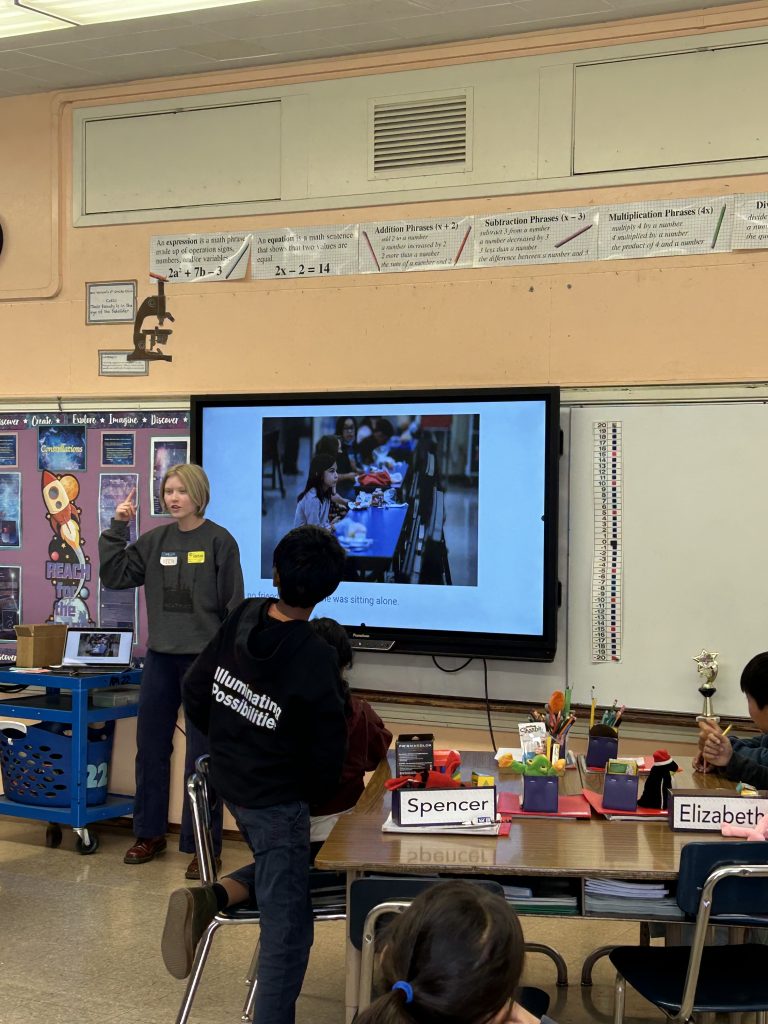
Microgrant recipient Prahi (15, CA) used her award to expand misinformation workshops for middle school students by creating and distributing Civic Literacy Kits filled with hands-on learning supplies. Prahi is the founder of Just the Gist, a student-led civic education platform helping young people understand government, current events, and the media. Through interactive activities and games, Prahi and her team helped students learn to identify misinformation, recognize media bias, distinguish fact from opinion, and think critically about the news. Prahi hopes Just the Gist will bring engaging, accessible media literacy education to more schools, after-school programs, and libraries across Los Angeles.
| What inspired you to start this project? | I started this project after noticing how often misinformation spreads online and how unprepared many young students are to evaluate the information they see. As someone who is deeply involved in civic engagement and media consumption, I realized that misinformation does not just affect adults—it starts shaping opinions and habits at a very young age. During conversations with elementary school students, it became clear that many of them struggled to distinguish between credible sources, opinion-based content, and outright false information, especially on social media and video platforms. This gap in media literacy felt concerning but also fixable with the right tools. The goal of these workshops was to make media literacy accessible, engaging, and age-appropriate. Rather than telling students what to think, we focused on teaching them how to think critically about information, empowering them to ask questions, spot red flags, and feel confident navigating media on their own. |
| While working on your project, what surprised you? | What surprised me most was how quickly students were able to improve their media literacy skills when given clear frameworks and interactive practice. Across nine workshops, our pre and post tests showed a 40% increase in students’ media literacy skills, which was far greater than we initially expected. I was also surprised by how engaged the students were. Even complex ideas such as identifying bias, questioning sources, and recognizing misleading headlines became approachable when taught through real examples and discussion. Many students began independently applying these skills by the end of the workshops, asking thoughtful questions and explaining their reasoning to peers. Additionally, it was encouraging to see how eager educators were to support this work, reinforcing the need for media literacy education at the elementary level. The experience showed me that combating misinformation is not only possible but highly effective when education starts early. |
| What do you feel you learned from this experience? | From this experience, I learned how powerful early education can be in addressing large societal issues like misinformation. Teaching media literacy to younger students reinforced that critical thinking is a skill that can and should be developed early, rather than assumed to come naturally later in life. I also learned the importance of adapting complex ideas to meet students where they are. Breaking down concepts like credibility, bias, and verification into simple and engaging lessons made them far more accessible and effective. Additionally, this project taught me how to measure impact meaningfully. Using pre and post assessments allowed us to clearly see growth and adjust our approach as needed. Overall, I learned that structured, intentional education paired with interactive learning can create measurable and lasting change. |
| How did Karma for Cara impact your project? | Karma for Cara played a critical role in making this project possible. The microgrant allowed us to purchase materials, develop structured lesson plans, and create interactive activities that kept students engaged throughout the workshops. Without this funding, it would have been difficult to deliver the workshops at the scale and quality that we did. The support from Karma for Cara enabled us to run nine complete workshops and collect meaningful data through pre and post tests, which helped validate the effectiveness of our approach. Beyond financial support, the grant provided encouragement and legitimacy to the project, reinforcing that youth led initiatives can have real impact when given the proper resources. |
| How will your project continue to impact others? | This project will continue to impact others by serving as a foundation for future media literacy workshops and curriculum development. The lesson plans, activities, and assessment tools created through this project can be reused, adapted, and expanded to reach more students in different schools and communities. Additionally, the skills students gained extend beyond the classroom. Media literacy helps students become more thoughtful consumers of information, which influences how they engage with news, social media, and civic discussions as they grow older. By equipping students with these tools early on, the project contributes to a more informed and critical generation that is better prepared to navigate an increasingly complex information landscape. |